Don't miss our holiday offer - up to 50% OFF!
Custom Wedding Dress Timeline in Bali: When Should You Start?
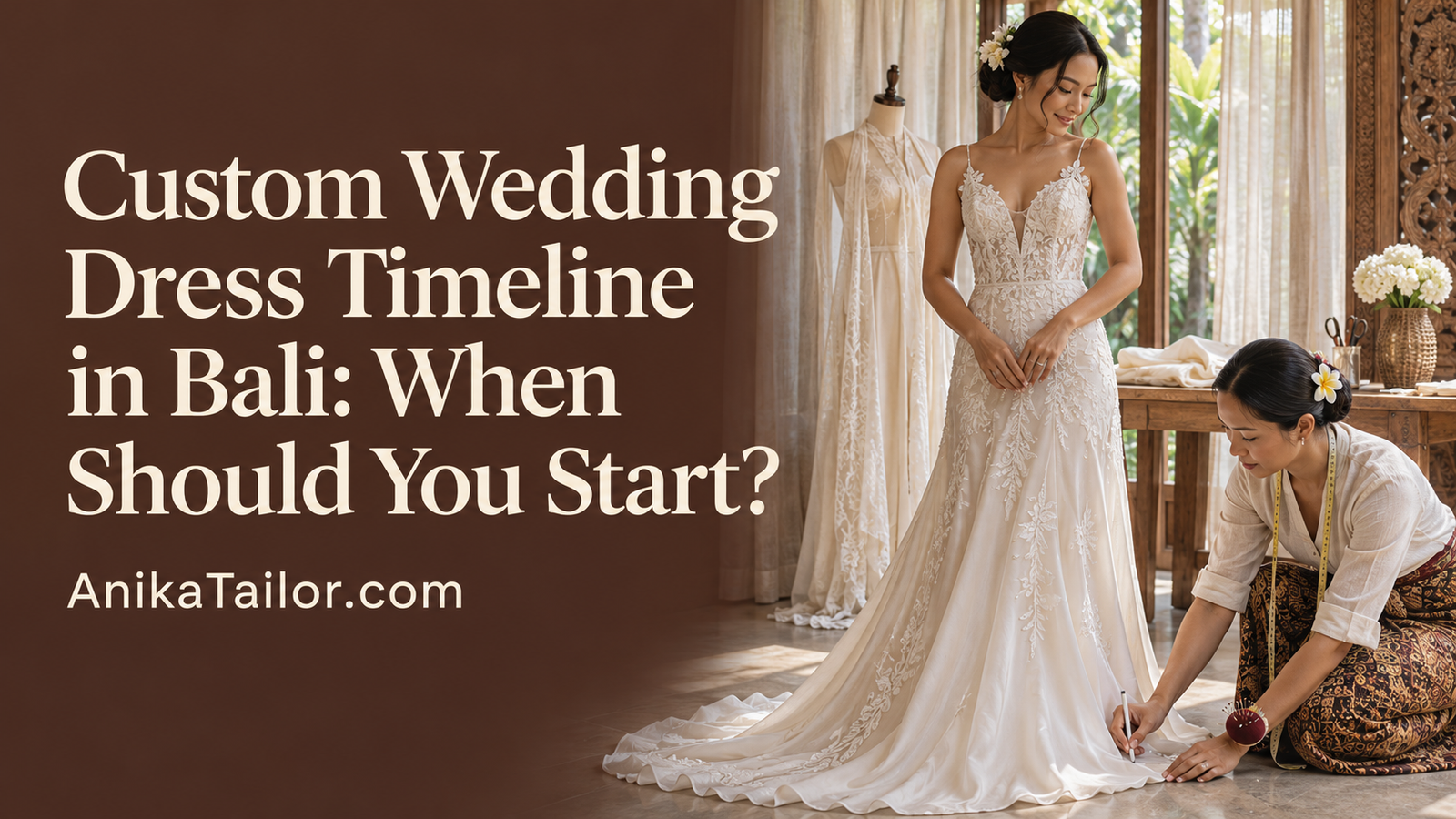
Custom Wedding Dress Timeline in Bali: When Should You Start?
Planning a wedding in Bali is an exciting journey, but creating the perfect wedding dress requires more than finding a design you love. From choosing the right silhouette and selecting fabrics to arranging fittings and final adjustments, every stage plays an important role in bringing your dream wedding dress to life.
For brides planning a destination wedding, timing becomes even more important. You may be travelling from overseas, coordinating with different wedding vendors, and working around a limited schedule before the big day.
If you are considering having a custom wedding dress made in Bali, one of the first questions to ask is: When should you start?
The short answer is that the earlier you begin, the more flexibility you will have. A custom wedding dress involves several stages, and allowing enough time helps ensure that the final result reflects your vision without unnecessary last-minute pressure.
In this guide, we will walk you through a practical wedding dress timeline, from your first design consultation to the final fitting, so you can plan your bridal look with confidence.
1. How Early Should You Order a Custom Wedding Dress?
Ideally, brides should begin planning their custom wedding dress around 6–12 months before the wedding.
This timeframe provides room to explore different designs, source suitable fabrics, develop the garment, and arrange fittings and alterations.
However, the timeline can vary depending on the complexity of the design.
For example:
- Simple Wedding Dresses: Minimalist designs with clean silhouettes may require a less complicated production process.
- Detailed Bridal Gowns: Dresses featuring lace, intricate embroidery, beading, or layered fabrics may require additional preparation and craftsmanship.
- Custom Designer-Inspired Dresses: Designs that involve specific details or unusual construction may need additional consultation and development.
If you are planning a destination wedding in Bali, it is also important to consider your travel dates and the availability of fitting appointments.
Starting early gives you more flexibility and allows you to enjoy the process rather than rushing through important decisions.
2. Your Custom Wedding Dress Timeline: Month by Month
Understanding each stage of the process can help you organise your bridal preparations more effectively.
Here is a suggested timeline for creating a custom wedding dress.
12–9 Months Before the Wedding: Find Your Inspiration
This is the perfect time to explore different wedding dress styles and identify the look you want for your special day.
Start by collecting inspiration from bridal magazines, Pinterest, fashion designers, and wedding photography.
Consider the following:
- What silhouette do you prefer?
- Do you want a minimalist, romantic, modern, or traditional design?
- Would you prefer lace, satin, chiffon, tulle, or another fabric?
- Will your wedding take place on the beach, in a garden, or inside a luxury venue?
- What details would make your dress feel personal?
At this stage, you do not need to have every detail finalised. The goal is to develop a clear direction for your bridal look.
9–6 Months Before the Wedding: Design Consultation and Fabric Selection
Once you have a general idea of your preferred style, it is time to discuss your vision with a tailor.
During the consultation, you can explore different design possibilities, review fabric options, and discuss the construction of your dress.
Fabric selection is particularly important because different materials create different silhouettes and textures.
For example:
- Satin: Creates a smooth, elegant finish with a beautiful drape.
- Lace: Adds romantic details and delicate texture.
- Chiffon: Lightweight and flowing, ideal for soft and effortless silhouettes.
- Tulle: Commonly used for layered skirts and voluminous bridal designs.
- Organza: Offers a lightweight structure with a slightly crisp appearance.
This is also a good time to discuss your wedding venue, dress requirements, budget, and expected completion date.
6–4 Months Before the Wedding: Measurements and Dress Construction
Once the design and fabric have been selected, the next stage involves taking your measurements and beginning the tailoring process.
Accurate measurements are essential for creating a garment that complements your body proportions.
Depending on the design, measurements may include:
- Bust and underbust.
- Waist and hips.
- Shoulder width.
- Arm and sleeve measurements.
- Dress length.
- Neckline and back measurements.
- Additional measurements required for the chosen silhouette.
During this stage, the dress begins to take shape according to your selected design.
For more elaborate bridal gowns, additional attention may be required for the structure, layers, lace placement, and decorative details.
4–3 Months Before the Wedding: First Fitting
The first fitting is an important opportunity to see how the dress looks on your body.
Rather than focusing only on the overall appearance, pay attention to how the garment feels and moves.
Check the following:
- Does the bodice sit comfortably?
- Is the waistline positioned correctly?
- Does the neckline match your expectations?
- Is the dress balanced around the hips?
- Does the skirt fall naturally?
- Can you walk and move comfortably?
This is the time to communicate any concerns or changes you would like to make.
Remember, a wedding dress should look beautiful, but it should also allow you to enjoy your celebration comfortably.
3–2 Months Before the Wedding: Second Fitting and Refinements
As the dress progresses, another fitting may be arranged to evaluate the overall silhouette and finishing details.
This stage focuses on refining the garment and checking whether the design matches your original expectations.
Depending on the dress, adjustments may involve:
- Refining the bodice and waist.
- Adjusting the dress length.
- Improving the fit around the bust and hips.
- Checking the placement of lace and embroidery.
- Adjusting sleeves, straps, or neckline details.
- Reviewing the train and overall movement.
If your wedding dress includes intricate decorative work, make sure these details are carefully reviewed.
1 Month Before the Wedding: Final Fitting
The final fitting should focus on ensuring that the dress is ready for your wedding day.
At this stage, most major design decisions should already be completed.
Check that:
- The dress fits comfortably.
- The length works with your wedding shoes.
- The closure and fastening details are secure.
- The train falls as intended.
- All decorative elements are properly finished.
- You can sit, walk, and move comfortably.
It is also a good idea to bring your wedding shoes and planned accessories to the final fitting.
This helps ensure that the entire bridal look works together.
1–2 Weeks Before the Wedding: Collection and Preparation
Your wedding dress should ideally be collected with enough time to spare before the ceremony.
Once you have received the finished dress, store it carefully in a suitable garment bag and follow your tailor’s recommendations for handling and transportation.
If you are travelling internationally, plan how you will transport the dress safely.
Avoid leaving collection until the day before your wedding, as unexpected adjustments or transportation issues may arise.
3. How to Choose the Right Wedding Dress for a Bali Wedding
Bali offers a wide variety of wedding settings, from beachfront ceremonies and tropical gardens to elegant villas and luxury resorts.
Your wedding venue can influence the silhouette, fabric, and overall design of your dress.
Here are some styles worth considering.
Beach Wedding Dresses
For a beachfront ceremony, lightweight and flowing dresses are popular choices.
Chiffon, soft tulle, and lightweight lace can create beautiful movement while complementing the natural surroundings.
A simple silhouette with delicate details can look especially elegant against the ocean.
Garden Wedding Dresses
Garden weddings often suit romantic designs featuring floral lace, soft fabrics, and flowing skirts.
A-line silhouettes, delicate sleeves, and subtle embroidery can complement the natural setting.
Luxury Villa Wedding Dresses
For a sophisticated villa celebration, consider structured satin gowns, elegant off-shoulder designs, or dresses with a beautifully defined silhouette.
These styles can create a refined appearance that works well for formal wedding photography and evening receptions.
Traditional and Cultural Wedding Dresses
If your celebration includes cultural elements, you may want to incorporate traditional details into your bridal outfit.
Custom tailoring allows you to explore different design elements, fabrics, and decorative finishes to create something meaningful to your celebration.
4. What Can Affect Your Wedding Dress Timeline?
Not every custom wedding dress follows the same production schedule.
Several factors can influence how long the process takes.
Design Complexity
A minimalist dress generally involves different construction requirements from a gown featuring multiple layers, detailed lacework, beading, or intricate embroidery.
Fabric Availability
Some fabrics may need to be sourced from specific suppliers. If you have a particular material in mind, discuss its availability early.
Customisation Details
Personalised embroidery, decorative elements, and unusual design features may require additional preparation and finishing time.
Fittings and Adjustments
The number of fittings depends on the garment and the changes required throughout the process.
Travel Schedule
For destination brides, the time spent in Bali may influence when measurements, fittings, and collection can take place.
Sharing your wedding and travel dates with your tailor from the beginning helps create a more realistic production schedule.
5. Tips for Destination Brides Having a Wedding Dress Made in Bali
If you are travelling to Bali specifically for your wedding, coordinating your dress fittings requires a little extra planning.
Here are some practical tips to make the experience easier.
- Share Your Wedding Date Early
Tell your tailor your exact wedding date and travel schedule during the first consultation.
This helps establish whether the desired design can be completed within your available timeframe.
- Prepare Reference Photos
Bring inspiration photos showing the front, back, silhouette, and details of your preferred dress.
If possible, include examples of fabrics and decorative elements you like.
- Discuss Fabric Availability
If you have a particular fabric or colour in mind, ask about availability before finalising the design.
- Schedule Fittings in Advance
Avoid arranging fittings at the last minute, particularly during busy wedding seasons.
- Bring Your Wedding Shoes
The correct heel height can affect the final length and proportions of your dress.
- Allow Time for Unexpected Adjustments
Even with careful planning, small changes may be needed. Keeping some extra time in your schedule can make the experience much less stressful.
6. What Should You Prepare Before Visiting a Wedding Dress Tailor?
A little preparation before your first consultation can make the design process much more productive.
Consider preparing the following:
- Your wedding date and venue.
- Inspiration photos or design references.
- Preferred dress silhouette.
- Fabric and colour preferences.
- Estimated budget.
- Your height and approximate measurements.
- Wedding shoes, if already selected.
- Any specific details you want to incorporate.
You do not need to have everything figured out before visiting a tailor. A consultation is also an opportunity to explore ideas and discover what works best for your wedding.
7. Why Choose Anika Tailor for Custom Wedding Dresses in Bali?
Finding the right tailoring team is an important part of creating a wedding dress that reflects your personality and vision.
At Anika Tailor Bali, we provide personalised tailoring services for customers looking to create garments based on their individual measurements, preferences, and design ideas.
Whether you envision a minimalist bridal gown, a romantic lace dress, an elegant evening outfit, or a more distinctive design, our team can help you explore different possibilities.
Our tailoring services include:
- Personalised Designs: Choose from our pattern book, bring your favourite designer garment as a reference, or share your own sketches.
- Fabric Selection: Explore a range of imported and locally available fabrics to find materials suitable for your bridal design.
- Made-to-Measure Clothing: Create garments according to your individual measurements and preferences.
- Custom Details: Explore different design elements, silhouettes, and finishing details.
- Additional Customisation: Beading and embroidery services are also available for customers looking for more personalised garments.
Located in Kuta, Bali, Anika Tailor welcomes both local and international customers looking for personalised tailoring services.
For brides planning a destination wedding, we recommend contacting our team early to discuss your wedding date, preferred design, and fitting schedule.
Frequently Asked Questions About Custom Wedding Dress Timelines in Bali
How many months before my wedding should I order a custom wedding dress?
Ideally, start planning around 6–12 months before your wedding. This allows time for design consultations, fabric selection, dress construction, fittings, and final adjustments.
Can I have a custom wedding dress made in Bali if I am travelling from overseas?
Yes. International brides can arrange consultations, measurements, fittings, and collection around their travel schedules. It is important to communicate your arrival and departure dates with your tailor in advance.
How many fittings does a custom wedding dress require?
The number of fittings depends on the design and construction of the dress. More elaborate gowns may require additional fittings to refine the silhouette and decorative details.
Is three months enough time to make a custom wedding dress?
It may be possible for certain designs, depending on the tailor’s schedule, fabric availability, and complexity of the garment. However, a shorter timeline leaves less room for unexpected adjustments, so early consultation is recommended.
What is the best fabric for a beach wedding dress in Bali?
Chiffon, lightweight lace, soft tulle, and suitable lightweight fabrics are popular choices for beach weddings. The best option depends on your preferred silhouette and overall design.
Can I bring my own wedding dress design?
Absolutely. You can bring reference photographs, sketches, or inspiration from your favourite designer. These references help communicate your ideas during the consultation.
Where can I get a custom wedding dress made in Bali?
Anika Tailor offers personalised tailoring services in Kuta, Bali. You can visit the store to discuss your bridal design, explore fabric options, and arrange measurements.
Start Your Bridal Journey with Anika Tailor Bali
Your wedding dress is more than an outfit. It represents your personal style and becomes part of the memories you will carry long after your wedding day.
From the first design inspiration to the final fitting, taking the time to plan your dress properly can make the entire experience more enjoyable.
Whether you are dreaming of a flowing beach wedding gown, an elegant satin dress, or a beautifully detailed bridal design, Anika Tailor is here to help bring your ideas to life.
The perfect wedding dress starts with a vision, but the right preparation helps make it a reality.
Planning your dream wedding in Bali?
Contact Anika Tailor to discuss your custom wedding dress ideas and arrange your tailoring consultation.