Don't miss our holiday offer - up to 50% OFF!
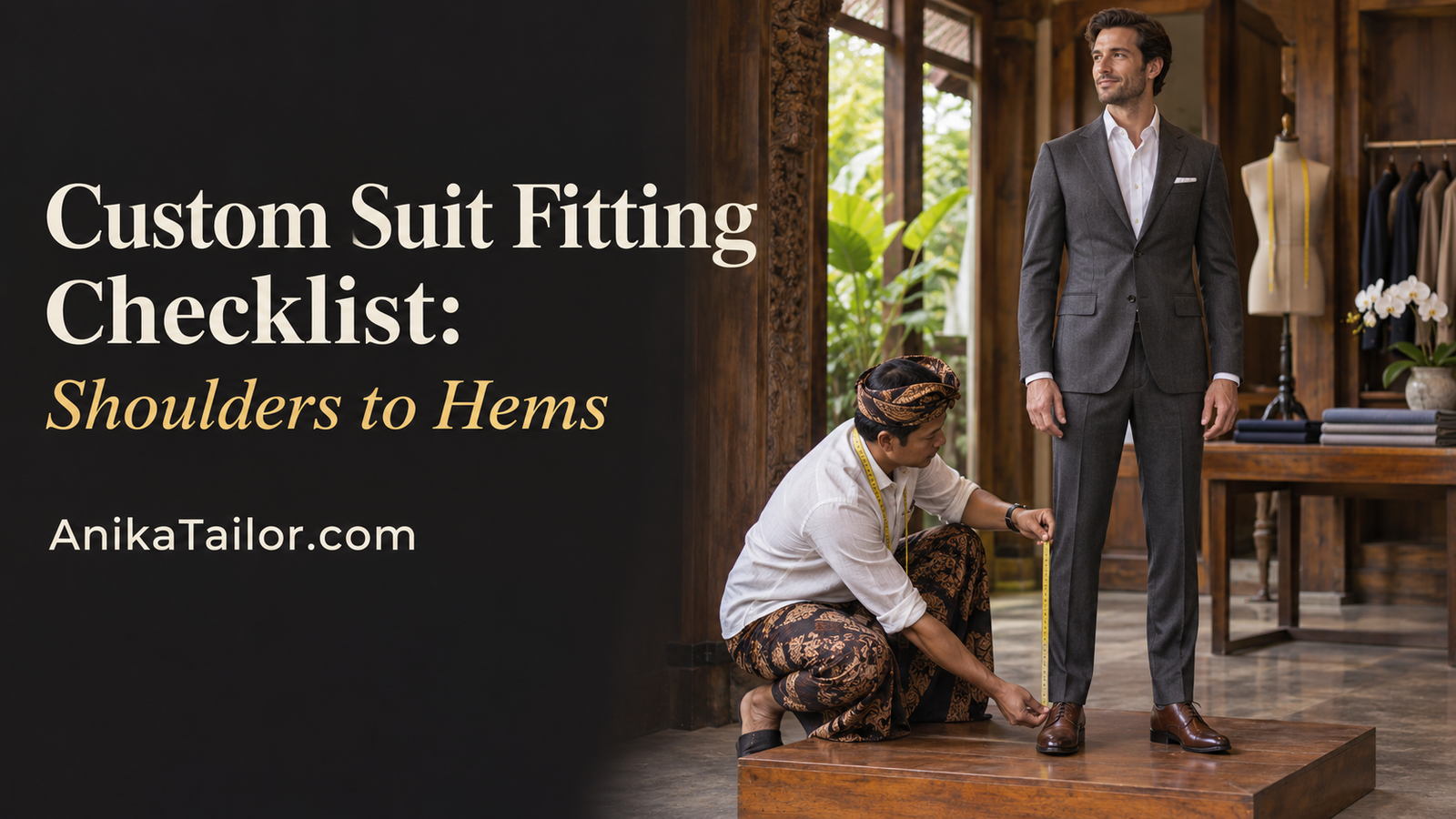
Custom Suit Fitting Checklist: Shoulders to Hems
Custom Suit Fitting Checklist: Shoulders to Hems
A great suit is not defined by its price tag, fabric, or designer label alone. What truly makes a suit look exceptional is how well it fits the person wearing it.
A jacket that sits perfectly on the shoulders, sleeves with the right length, trousers that fall naturally, and a clean silhouette can completely transform your appearance. Even the finest fabric will not look its best if the proportions are wrong.
This is why understanding the details of a custom suit fitting is essential before ordering a tailored garment.
Whether you are preparing for a wedding, upgrading your business wardrobe, or creating a suit for a special occasion, knowing what to look for during a fitting will help you achieve a more polished result.
At Anika Tailor Bali, we believe that good tailoring is all about the details. Here is a practical checklist to help you understand every part of a suit fitting, from the shoulders all the way down to the trouser hems.
1. Start with the Shoulders: The Foundation of a Great Suit
If there is one area you should pay particular attention to when trying on a suit, it is the shoulders.
The shoulders establish the overall structure of the jacket and influence how the rest of the garment sits on your body.
During your fitting, check the following:
- The shoulder seams should sit naturally at the edge of your shoulders.
- The fabric should not create noticeable bumps or indentations.
- The shoulders should not feel excessively tight when you move your arms.
- The jacket should maintain a smooth and balanced shape when viewed from the front and back.
What to avoid: Shoulder seams that extend too far beyond your natural shoulders can make the jacket look oversized, while shoulders that are too narrow may create pulling and uncomfortable tension.
Remember, a well-fitted shoulder creates the foundation for a beautifully structured jacket.
2. Check the Collar and Neckline
The collar is another small detail that can make a noticeable difference.
When the jacket is worn correctly, the collar should sit comfortably against the back of your neck without leaving a visible gap.
During your fitting, make sure:
- The jacket collar sits close to your shirt collar.
- There is no excessive fabric gathering around the neckline.
- The collar does not pull away when you stand naturally.
- The back of the jacket remains smooth.
A collar that sits correctly helps create a clean transition between the shirt, jacket, and shoulders.
3. Chest and Button Closure: Finding the Right Balance
The chest area should provide enough room for comfortable movement while maintaining the jacket’s intended shape.
A suit should follow your natural body proportions rather than squeeze your upper body or hang loosely.
Try checking these details:
- The jacket should close comfortably without pulling around the button.
- There should be no noticeable X-shaped wrinkles when the jacket is buttoned.
- The lapels should lie smoothly against the chest.
- You should be able to move your arms naturally.
- The chest should look structured without appearing overly padded or bulky.
For a classic two-button suit, the top button is generally the one fastened when standing. The bottom button is traditionally left undone.
A useful fitting tip: Button your jacket and take a natural breath. If the fabric feels tight across your chest or abdomen, discuss the fit with your tailor.
4. Waist Suppression and Jacket Shape
The waist is where the jacket’s silhouette becomes more defined.
A properly tailored jacket should follow the natural shape of your torso without making you feel restricted.
Depending on your preferred style, you may choose a more fitted silhouette or a slightly relaxed cut.
Check whether:
- The jacket creates a balanced shape around your waist.
- The fabric does not bunch when the jacket is buttoned.
- The sides fall smoothly without excessive pulling.
- You can sit and move comfortably.
- The jacket looks proportionate from both the front and side.
A good tailor should be able to help you find the right balance between a sharp silhouette and everyday comfort.
5. Sleeve Length: Getting the Details Right
Sleeve length is one of the easiest details to overlook, yet it plays an important role in the overall appearance of a suit.
Ideally, the jacket sleeve should allow a small portion of your shirt cuff to remain visible.
As a general guideline:
- The jacket sleeve should end around the wrist bone.
- Approximately 0.5–1.5 cm of shirt cuff may be visible, depending on personal preference and styling.
- Both sleeves should have a balanced length.
- The sleeves should not bunch excessively around the elbow or wrist.
Also consider the sleeve width. It should be comfortable without looking too loose or overly tight.
The goal is to create a clean finish that complements the jacket’s proportions.
6. Jacket Length: Getting the Proportions Right
A jacket that is too long or too short can affect the entire appearance of your suit.
The ideal length depends on your body proportions, the jacket style, and the silhouette you want to achieve.
During your fitting, check:
- The jacket looks balanced against your torso and legs.
- The front and back lengths sit evenly.
- The jacket does not appear unusually short or oversized.
- You can move naturally without the jacket riding up excessively.
For a classic suit, the jacket generally provides enough coverage to create balanced proportions between the upper and lower body.
Modern tailoring may use slightly shorter proportions, but the overall appearance should remain harmonious.
7. Trouser Waist and Seat: Comfort Comes First
A great suit is not just about the jacket. The trousers need equal attention.
The waist and seat should provide a secure and comfortable fit without requiring constant adjustment.
Check these areas during your fitting:
Waist
The waistband should sit securely without digging into your skin or slipping down.
Hips and Seat
The trousers should follow your natural shape without pulling tightly across the hips or creating excessive fabric around the seat.
Rise
The rise determines how high or low the trousers sit on your body. Choose a position that feels comfortable and complements your overall proportions.
Movement
Try walking, sitting, and standing to make sure the trousers allow comfortable movement.
A well-fitted pair of trousers should feel natural throughout the day, not just when you are standing in front of a mirror.
8. Trouser Leg Shape and Width
The leg shape has a significant influence on the overall style of your suit.
Different trouser cuts create different appearances, so your choice should reflect your personal preference and the type of suit you are making.
Here are three popular options:
Slim Fit
A closer silhouette through the legs creates a modern and streamlined appearance. It should still provide enough room for comfortable movement.
Regular Fit
A more traditional cut offers additional room through the thighs and legs while maintaining a clean, balanced shape.
Relaxed Fit
A looser silhouette provides a more casual and contemporary appearance, particularly suitable for certain fashion-forward or relaxed tailoring styles.
When choosing the leg shape, consider your body proportions, footwear, and the overall design of your jacket.
9. Trouser Break and Hem Length
The trouser hem is the final detail that brings the entire suit together.
Even a well-fitted jacket and beautifully constructed trousers can look unfinished if the hem length is incorrect.
There are several common trouser break styles.
No Break
The trousers end just above the shoe with little or no fabric folding at the front.
This creates a clean and modern appearance.
Slight Break
The trousers create a small fold where the fabric meets the shoe.
It is a versatile option that works well for both contemporary and classic suits.
Full Break
The trousers create a more noticeable fold over the shoe.
This is traditionally associated with a more relaxed or classic trouser length.
There is no single correct choice. The best option depends on your preferred style, trouser cut, and footwear.
During your fitting, wear the type of shoes you intend to pair with the suit whenever possible. This helps your tailor assess the trouser length more accurately.
10. Final Suit Fitting Checklist Before Collection
Before collecting your custom suit, take a moment to review the entire garment.
Use this checklist to make sure the important details have been considered.
Jacket
- Shoulders sit naturally without bumps or pulling.
- Collar rests comfortably against the neck.
- Chest feels comfortable when buttoned.
- Lapels lie flat against the chest.
- Waist creates a balanced silhouette.
- Sleeves have the correct length.
- Jacket length complements your body proportions.
- Buttons and pockets are properly finished.
Trousers
- Waistband sits comfortably.
- Seat and hips have enough room.
- Rise feels natural.
- Thighs and legs allow comfortable movement.
- Trouser width matches your preferred style.
- Hem length works with your shoes.
- Both legs have a balanced appearance.
Overall Appearance
- The jacket and trousers look proportionate together.
- The fabric falls smoothly without unnecessary wrinkles.
- The suit feels comfortable when standing, walking, and sitting.
- Buttons, stitching, lining, and other finishing details have been checked.
- The overall design matches your original expectations.
One final tip: Do not judge a suit only by how it looks while standing still. Walk around, sit down, raise your arms, and move naturally. A properly fitted suit should look good and feel comfortable in real-life situations.
11. Why Professional Suit Fittings Matter
A custom suit involves more than taking a few measurements and selecting a fabric.
Every individual has different body proportions, posture, shoulder shapes, and preferences. These differences influence how a garment should be constructed and adjusted.
Professional fittings allow your tailor to evaluate how the suit behaves on your body rather than relying on measurements alone.
At Anika Tailor, the tailoring process is focused on creating garments that reflect each customer’s individual measurements and personal style.
Whether you prefer a classic business suit, a modern slim-fit design, or a formal wedding outfit, paying attention to the fitting details helps create a more refined final result.
12. Experience Personalised Tailoring at Anika Tailor Bali
The difference between an ordinary suit and a well-tailored suit often comes down to details that are easy to miss.
From the way the shoulders sit to the final trouser hem, every measurement and adjustment contributes to the overall appearance.
At Anika Tailor Bali, we offer personalised tailoring services for customers who want garments designed around their measurements, preferences, and individual style.
Our services include:
- Personalised Designs: Choose from our pattern book, bring your favourite designer garment as a reference, or share your own sketches.
- Fabric Selection: Explore a range of imported and locally available fabrics for different tailoring requirements.
- Made-to-Measure Clothing: Create garments based on your individual measurements and preferences.
- Custom Details: Personalise lapels, buttons, pockets, linings, and other finishing elements.
- Additional Customisation: Beading and embroidery services are also available for customers looking for more personalised garment details.
Located in Kuta, Bali, Anika Tailor welcomes both local and international customers looking for personalised tailoring services.
Whether you are creating your first custom suit or adding another piece to your wardrobe, our team is here to help you explore the possibilities of tailored clothing.
Frequently Asked Questions About Custom Suit Fittings
How many fittings are needed for a custom suit?
The number of fittings depends on the tailoring method, design complexity, and adjustments required. Some garments may need only a limited number of fittings, while more detailed designs may require additional appointments.
What should I wear to a suit fitting?
It is helpful to wear a dress shirt and shoes similar to those you plan to wear with your finished suit. This allows your tailor to assess sleeve and trouser lengths more accurately.
How tight should a custom suit feel?
A custom suit should follow your body’s shape without restricting movement. You should be able to sit, walk, and move your arms comfortably without excessive pulling or tightness.
Should a suit jacket cover the entire seat?
Traditional suit jackets generally provide enough length to create balanced proportions and cover much of the seat. However, the ideal length depends on your body shape and preferred style.
How much shirt cuff should show under a suit jacket?
A common guideline is approximately 0.5–1.5 cm of shirt cuff. The exact amount depends on your personal preference and the proportions of the jacket.
Can a custom suit be adjusted after the first fitting?
Yes. Depending on the construction and design, adjustments can often be made to improve the fit. It is best to discuss any areas of discomfort or concern directly with your tailor.
Where can I get a custom suit fitted in Bali?
Anika Tailor offers personalised tailoring services in Kuta, Bali. Customers can discuss their preferred designs, explore fabric options, and arrange measurements and fitting appointments.
A Better Fit Starts with the Right Details
A well-tailored suit should never feel like something you simply wear. It should feel like something created specifically for you.
From the shoulders that define the jacket’s structure to the hems that complete the silhouette, every detail contributes to the way you look and feel.
Whether you need a suit for business, a wedding, or a special occasion, understanding the fitting process helps you make better decisions and get more from your tailoring experience.
At Anika Tailor Bali, great style starts with a great fit.
Visit Anika Tailor in Kuta, Bali, and discover the possibilities of personalised tailoring.